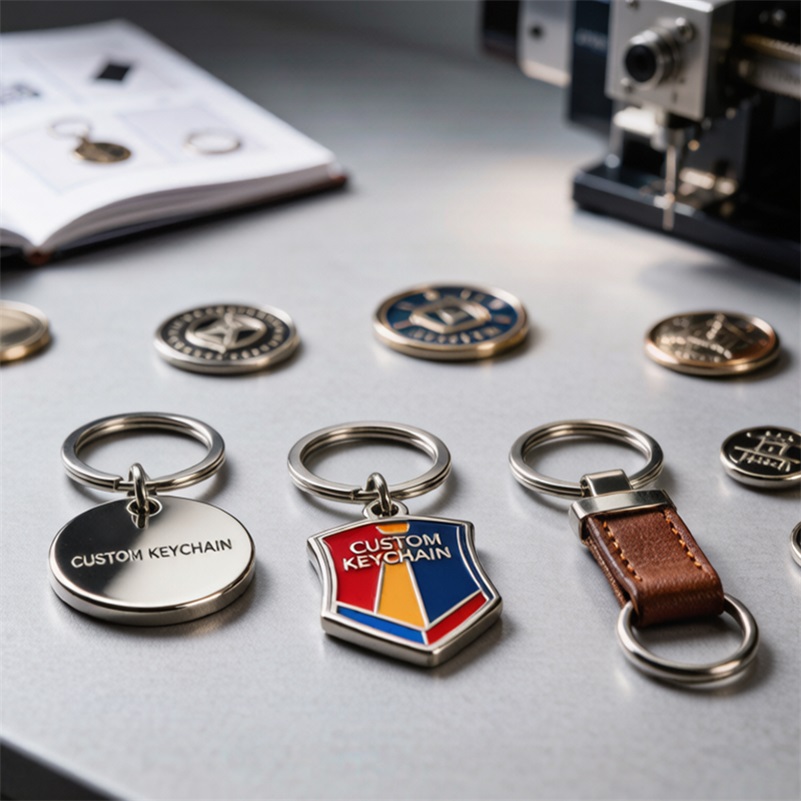
When you need custom metal keychains for your brand, event, or organization, the process can feel overwhelming. How do you turn a simple idea into a finished product that looks professional, feels premium, and arrives on time?
Understanding how a metal keychain manufacturer works — from initial concept to final shipment — helps you make informed decisions and get the best results. In this guide, we walk through every stage of the journey, showing exactly how a reliable custom keychain factory transforms your vision into reality.
Step 1: Sharing Your Idea
Every great keychain starts with an idea. Maybe you have a company logo you want to turn into a branded giveaway. Perhaps you need commemorative keychains for a milestone anniversary or a sports event. Or you might be designing a custom shape that represents something meaningful to your community.
Whatever your concept, the first step is communicating it clearly to your metal keychain manufacturer. This typically involves:
-
Sending a logo file (AI, EPS, PDF, PNG, or JPG)
-
Describing the desired shape, size, and thickness
-
Indicating preferred materials (brass, zinc alloy, stainless steel, or iron)
-
Specifying finish type (polished, antique, matte, sandblasted, etc.)
-
Mentioning quantity and budget expectations
At Star Awards, our team of 12+ senior designers reviews every inquiry carefully. Even a rough sketch or verbal description can be enough to start the conversation. We help translate your ideas into technical specifications that our production team can work with.
Keyword note: When searching for a partner, look for a "custom keychain factory" that offers free design support — it saves time and ensures accuracy.
Step 2: Free Design & Proofing
Once your requirements are clear, the design phase begins. This is where your idea starts taking visual shape.
A professional metal keychain manufacturer will create a digital proof — usually a 2D vector rendering or a 3D mockup — showing exactly how your keychain will look. The proof includes:
-
Front and back views
-
Color placement for enamel filling
-
Metal finish preview
-
Dimensions and thickness annotations
-
Attachment type (split ring, lobster clasp, ball chain, leather strap, etc.)
This stage allows for revisions. Most reputable manufacturers offer unlimited adjustments until you are fully satisfied. For complex designs, a physical sample (pre-production sample) may be recommended before mass production.
Pro tip: Always request a 3D rendering if your design involves multiple layers, contours, or intricate details. It reveals how light interacts with the metal surface and helps catch potential issues early.
Step 3: Material Selection
The material you choose directly affects the look, feel, durability, and cost of your custom metal keychains. Here are the most common options offered by a wholesale metal keychain supplier:
|
Material
|
Best For
|
Characteristics
|
|
Brass
|
Premium gifts, awards
|
Rich gold tone, heavy feel, ages beautifully
|
|
Zinc Alloy
|
Most custom shapes
|
Affordable, easy to cast, versatile finishes
|
|
Stainless Steel
|
Modern/minimalist designs
|
Corrosion-resistant, sleek, durable
|
|
Iron
|
Budget-friendly bulk orders
|
Magnetic, can be plated to mimic other metals
|
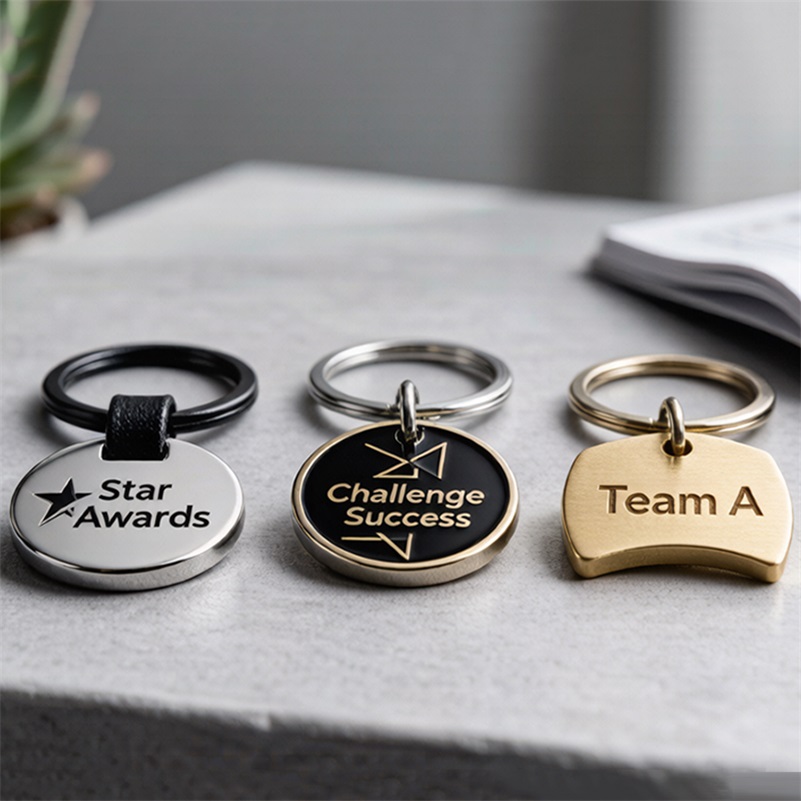
Each material supports various plating options: gold, silver, nickel, bronze, gunmetal, rose gold, rainbow, and more. Your OEM keychain manufacturer can advise on which combination suits your design and budget.
Step 4: Tooling & Mold Making
For custom-shaped keychains — anything beyond standard round or rectangular blanks — a mold must be created. This is one of the most critical steps in the manufacturing process.
Using your approved design, skilled toolmakers carve a steel mold. The mold captures every detail of your artwork, including raised edges, recessed areas for enamel, and fine text or logos. Once the mold is ready, it can be used repeatedly for future reorders, making subsequent batches faster and more cost-effective.
Mold costs vary depending on complexity and size. Many custom keychain factories include the mold fee in the first order and waive it for repeat orders.
Step 5: Production Process
With the mold prepared, mass production begins. A typical production line at a metal keychain manufacturer follows these stages:
5.1 Die Casting or Stamping
Molten metal is injected into the mold under high pressure (die casting) or metal sheets are pressed into shape (stamping). After cooling, the rough keychain blanks are removed.
5.2 Trimming & Polishing
Excess material (flash) is trimmed off. Each piece is polished to remove burrs and prepare the surface for finishing.
5.3 Plating
Keychains go through electroplating baths to apply the chosen metal coating. This gives them their final metallic color and protects against tarnishing.
5.4 Enamel Filling (if applicable)
For soft enamel or hard enamel keychains, colored epoxy or enamel paint is hand-filled into recessed areas. Hard enamel is baked and polished flat; soft enamel has a textured finish with visible metal borders.
5.5 Attachment Assembly
Split rings, key rings, lobster clasps, or leather straps are attached. Some designs also include swivel joints or bottle openers.
5.6 Quality Inspection
Every piece undergoes visual inspection. Common checks include:
-
Surface scratches or blemishes
-
Enamel bubbles or uneven filling
-
Plating uniformity
-
Attachment strength
-
Overall dimensions matching the approved sample
Reputable manufacturers of custom keychains maintain strict quality control standards, often inspecting 100% of products before packaging.
Step 6: Packaging Options
Packaging is part of your brand experience. A thoughtful metal keychain manufacturer offers various packaging choices:
-
Poly bags (basic protection)
-
Velvet pouches (premium feel)
-
Card backing with blister packs (retail-ready)
-
Gift boxes with foam inserts (high-end presentation)
-
Custom printed hang tags (brand exposure)
You can also add barcode stickers, branding on the backing card, or eco-friendly packaging materials.
Step 7: Shipping & Delivery
Once packaged, your order is prepared for shipment. Depending on your location and urgency, options include:
-
Express courier (DHL, FedEx, UPS): 3–7 business days
-
Air freight: 5–10 business days
-
Sea freight: 20–35 business days (best for large volumes)
A professional keychain supplier China will provide tracking information and handle all export documentation. At Star Awards, we ship to clients across North America, Europe, Australia, Southeast Asia, and the Middle East.
Why Work with a Factory-Direct Manufacturer?
Partnering directly with a metal keychain manufacturer rather than a middleman offers several advantages:
-
Better pricing — No markup from traders or distributors
-
Direct communication — Faster responses, fewer misunderstandings
-
Full customization control — Every detail is managed under one roof
-
Faster turnaround — Design, sampling, production, and shipping coordinated internally
-
Long-term reliability — Build a relationship with the actual production team
Conclusion
Turning a simple idea into a finished metal keychain is a journey that requires expertise, precision, and collaboration. By understanding each stage — from design and material selection to production, packaging, and delivery — you set yourself up for success.
Whether you need 500 pieces for a corporate event or 50,000 units for a nationwide promotion, working with an experienced custom metal keychain manufacturer makes all the difference.
Ready to bring your idea to life? Contact Star Awards today for a free design consultation and factory-direct quote. Let us show you why thousands of clients trust us as their go-to metal keychain manufacturer.